
It’s always amazing to see industry insiders forgeting that it’s moviegoer behavior that runs the business.
The documentary sector is suffering a meltdown because insiders like highly-partisan content like anti-Iraq war critique “Fahrenheit 9/11,” ignoring industry wisdom that it’s an outlier from this rule of thumb. Political films with an angry bent have a long history of not selling, although “Fahrenheit 9/11” is a conspicuous exception.
“Newsweek” magazine published a pretty good article about how the entire documentary film category nose-dived with “Fahrenheit” wannabes as the main culprits.
“Unless documentaries were made by Michael Moore (‘Fahrenheit 9/11’), or featured Al Gore talking about ‘inconvenient truths,’ the theatrical market for these films collapsed,” notes the “Newsweek” article by film critic David Ansen. “Huge expectations ran into a wall of audience indifference: ‘Crazy Love’ was supposed to go through the roof yet it made a measly $301,000.”
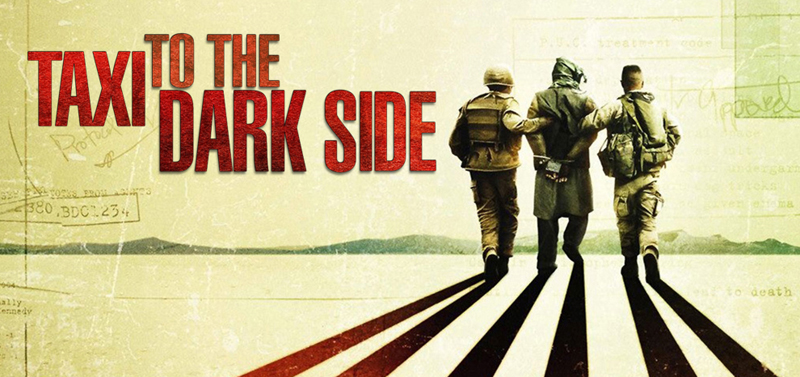
The “Newsweek” article continues: “‘Taxi to the Dark Side’ won the best-documentary Oscar—and its grosses, paltry to begin with, went down! Alex Gibney, the director of this tough movie about the torture of terror suspects by Americans, is suing THINKFilm, its distributor, for what he says was an inadequate release. With all due respect to Gibney, he’s kidding himself if he thinks tons of marketing money could have made a difference. Even Errol Morris’s high-profile film on Abu Ghraib, ‘Standard Operating Procedure,’ flopped—$209,000.”
Now that’s the reality. Filmmakers should blame themselves, and not their distributors and marketing agents, for angry political docs that flop. Another industry rule ignored by filmmakers these days is that awards don’t necessarily translate into box office, which is another inconvenient truth that lawsuit about “Dark Side” is ignoring.
Many of the current crop of documentaries represent fine film craftsmanship. My guess is audiences feel burned by manipulation of the hit and edgy documentaries of a few years ago, which broke with traditional by emphasizing show-biz glitz and refusing to seriously acknowledge contrary viewpoints. In the past, old school documentarians would serve up a central point of view that is necessary for storytelling, but along the way represented disagreeing opinions in a fair way and not demonize the other side.
Meanwhile, a documentary topical to the election season gets held back by government fiats. A federal district court upheld the decision by the Federal Election Commission to restrict broadcast advertising for 90-minute documentary “Hillary: The Movie” asserting it violated federal campaign laws, according to the “Christian Science Monitor” newspaper.
Citizens United, which produced the documentary critical of Hillary Clinton, says that ruling prevents it from booking hundreds of movie theaters. The organization is appealing the decision to the U.S. Supreme Court, asserting it has no ties to any political candidate and the FEC decision is an infringement on free speech. Michael Moore’s “Fahrenheit 9/11” ran into similar problems initially, but then removed references to President Bush in marketing materials to avoid SEC restrictions.
In another controversy surrounding political-themed documentaries, the Advertising Administration, which is a voluntary, movie industry-self regulatory organization, rejected a one-sheet marketing poster for ThinkFilm-distributed “Taxi to the Dark Side.” The issue is an image of a hooded prisoner (being escorted by two U.S. military men). Those connected with the film immediately criticized the decision, particularly noting fictional horror films seem to get greater leeway. The Advertising Administration said the decision was in keeping with past practices.
Films that seek U.S. audience classification ratings—the familiar G to R ratings–are required to comply with Advertising Administration guidelines. Makers of edgy film often chafe at restrictions.
However, filmmakers have the option of releasing any films unrated, since participation in the Ad Administration and its related CARA ratings (Classification And Ratings Administration) board is voluntary. The Ad Administration and CARA are organized in part by major studio trade group the MPAA as standalone entities.
Interestingly, the U.S. is the only major country in the world where films can be distributed without any official pre-release review of content. But because some media outlets such as newspapers chose not to accept ads for unrated films, indie distributors usually seek a formal rating.
The ad review agency and CARA are affiliated with major studio trade group the MPAA, but open their doors to films from both majors and indies. Major studio MPAA members are required by MPAA rules to have CARA ratings on all their films. ThinkFilm is not affiliated with an MPAA member company.
Some indie distributors view a tussle with the Ad Administration and CARA as positives to generate publicity. Indeed, a producer of “Taxi to the Dark Side” dutifully wrote a posting on HuffingtonPost, complaining of censorship. But so far, he isn’t discussing the available option of distributing unrated.
Finally, documentary filmmaker AJ Schnack rips the Academy of Motion Picture Arts & Sciences for its selections of films eligible for its documentary Oscar as being too timid and conventional. Writing on the Tribeca Film Festival website, he notes the Oscar documentary list ignores award choices of the International Documentary Association.
Schnack advocates using “filmmaking tools in new, exciting, and sometimes experimental ways. The old rulebook, which treats nonfiction as some specialized offshoot of journalism, has been thrown out…Should we prefer a competent, conventionally-styled film to one that swings for the fences, one whose highs hit us in unexpected ways, even if it occasionally falters in its risk taking?” Schnack discloses that one of his documentaries is among those passed over by the Academy.
Comment from “Marketing to Moviegoers” author Robert Marich: Though Schnack’s commentary is thoughtful, just because new wave documentary filmmakers have “thrown out” the rulebook doesn’t mean the Academy needs to as well.
The documentary category is given special Oscar status because under present guidelines it’s supposed to be in touch with reality, as an offshoot of journalism. If that’s a burden, then practitioners of the new wave should position their films for the general Oscar categories (which means giving up special status and getting in line with everyone else).
As for the Academy ignoring the choices of the International Documentary Assn., that’s why we have all these awards in the first place. Everyone is entitled to an opinion.
Maybe IDA is the one that got it wrong? These two organizations have different missions and different memberships, so I don’t expect that they will march in lock step.
In the more traditional documentary mold of nature science, Walt Disney Studios is launching Disneynature, a prestigious new production banner that will literally go to the ends of the earth to produce major big screen nature documentaries, Studios Chairman Dick Cook announced.
In the great tradition established by Walt Disney himself, Disneynature will offer spectacular entertainment about the world in which we live. The significance of the new banner goes beyond the studio, with The Walt Disney Company embracing this new initiative around the world through a number of its businesses, including publications, licensing, parks and educational outreach. Disney veteran Jean-Francois Camilleri, who has served as senior vice president and general manager for Walt Disney Studios Motion Pictures France will head the new unit.
Related content:
Leave a Reply